


en
- EN
- UA


The Discovery Phase in Product Development: What It Is and When It’s Essential
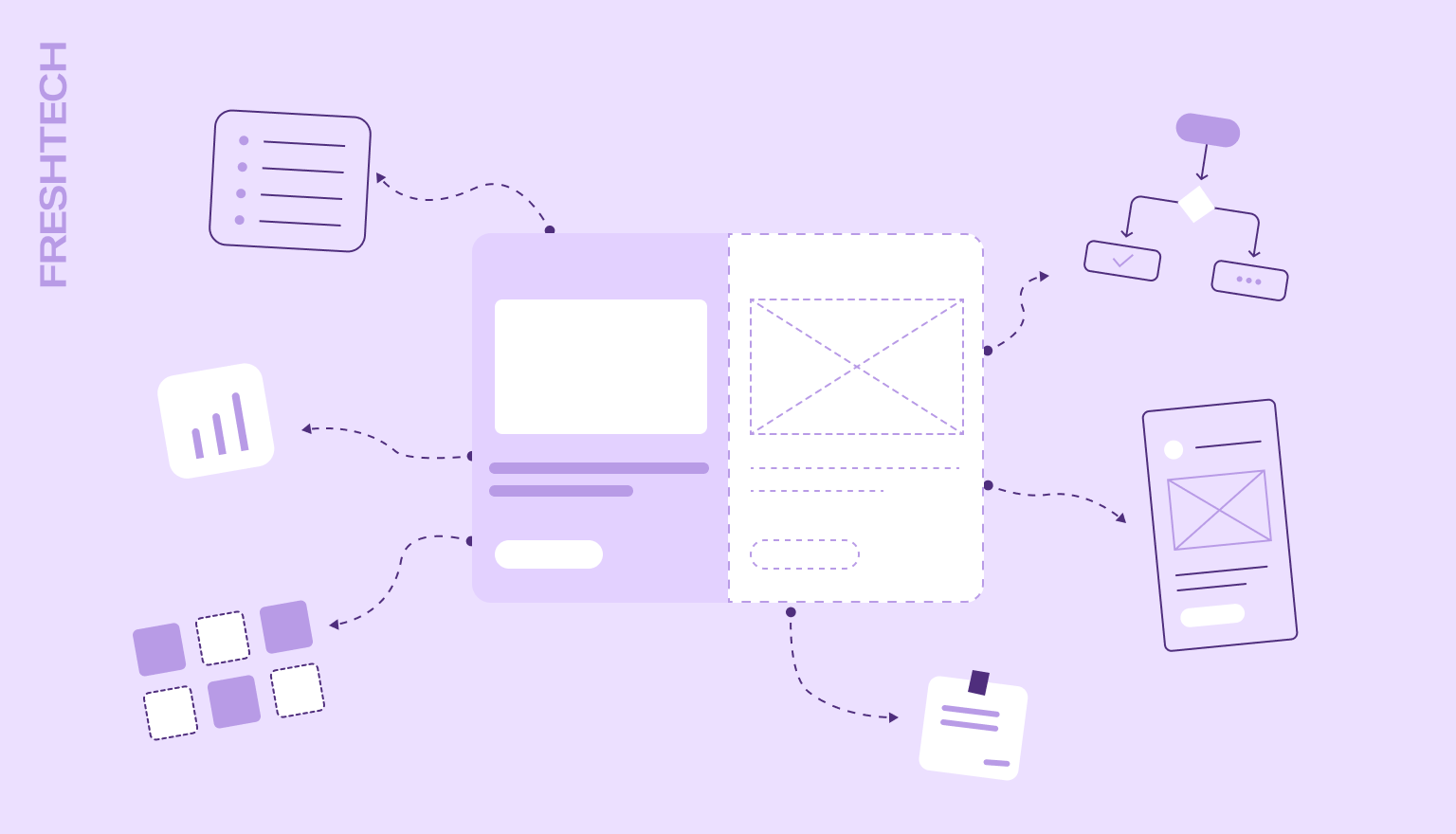
A product can be technically flawless and still fail to achieve a single business goal: if it solves the wrong problem, for the wrong audience, or at the wrong time. These mistakes rarely happen during development. Most often, they occur before it even starts, when a team skips the research phase and jumps straight into implementation. In this article, we break down what the Discovery phase is, how it works, and when it is indispensable.
The Discovery phase is a structured research process conducted by a team before development begins. Its goal is to verify whether the problem is correctly defined, if there is a demand for the solution, and whether it is technically and economically feasible.
What does the Discovery phase cover?
Discovery is not a linear process, but it follows a logical sequence. Each stage answers a specific question and provides input for the next. Let's take a closer look at these stages:
🔍 1. Stakeholder interviews
The first step is to understand the business context. The goal is to identify the actual business objectives, constraints, and success criteria. At this stage, it often turns out that different stakeholders have conflicting expectations for the same product. It is better to capture this at the start than to discover it after the first release.
🔍 2. User research
This research includes in-depth interviews, behavioral observation, and sometimes quantitative surveys to test hypotheses. The goal of this stage is to separate real pain points from imagined ones. Clients and managers tend to frame problems through the lens of their own experience. User research shifts the focus back to where it belongs, placing it onto the person who faces the problem every day.
🔍 3. Market and competitor analysis
The team investigates existing solutions, including direct competitors, adjacent products, and manual alternatives such as spreadsheets or non-automated processes. This involves analyzing their strengths, limitations, pricing models, and positioning. The goal is to identify unmet needs or segments where current solutions are underperforming.
🔍 4. Problem statement
This is a separate stage that is often underestimated. Based on the gathered data, the team formulates a single, clear statement: exactly what problem the product solves, for whom, and in what context. This serves as the working hypothesis that the team will continue to validate.
🔍 5. Hypothesis prioritization
Once the problem is defined, the team generates solution concepts—several approaches with different trade-offs between speed, cost, and depth of the solution. These concepts are then evaluated based on criteria such as technical feasibility, alignment with business goals, and potential user impact. This results in one or two concepts selected for more detailed development.
🔍 6. Technical feasibility check
Alongside product research, a technical assessment is conducted to determine whether the chosen concepts can be implemented. This involves checking the availability of necessary technologies and APIs, the existence of similar solutions on the market, potential bottlenecks in performance or security, and the alignment of the tech stack with the team's capabilities. Without this step, there is a risk of starting work on a product that turns out to be either too expensive to build or technically impossible to deliver within the specified timeframe.
🔍 7. Scope definition
At this stage, the team determines what will be included in the MVP: which features are essential to test the key hypothesis and which are not. The fewer features in the first version, the faster the team receives real feedback and the less an error costs. Based on the scope, the workload is estimated and a roadmap is created, outlining approximate timelines, required resources, and the sequence of tasks.
It is important to document not only what is included in the scope but also what was intentionally excluded and why. Without this, decisions tend to blur during development. Every new request seems like a logical addition, and the scope creeps up unnoticed.
5 signs that a Discovery phase is mandatory:
⚫️ The product is being built from scratch, and not a single assumption — about the audience, the problem, or the solution — has been validated with real data yet.
⚫️ There is an understanding of an unmet need, but how exactly to satisfy it remains an open question.
⚫️ Entering a new market or needing to reach a new audience. Experience and intuition do not work here; research and real-world data are required.
⚫️ A large-scale project with a significant budget: a discovery phase substantially reduces the risk of wasting resources in the wrong direction.
⚫️ The product is being relaunched or pivoting. Old solutions have stopped working, and new ones are not obvious, meaning the audience and context must be researched anew.
If you are planning a product launch and want to ensure a smooth Discovery phase, leave your contact details below. Our team will reach out to discuss your goals and help determine the most effective approach for your project.

Bring your ideas to life with FreshTech
Hi! I'm Max Rybalko, Head of Business Solutions. Choose a convenient time, and we'll discuss how to turn your project
into reality