


en
- EN
- UA


Automation Across Industries: What Diverse Businesses Have in Common
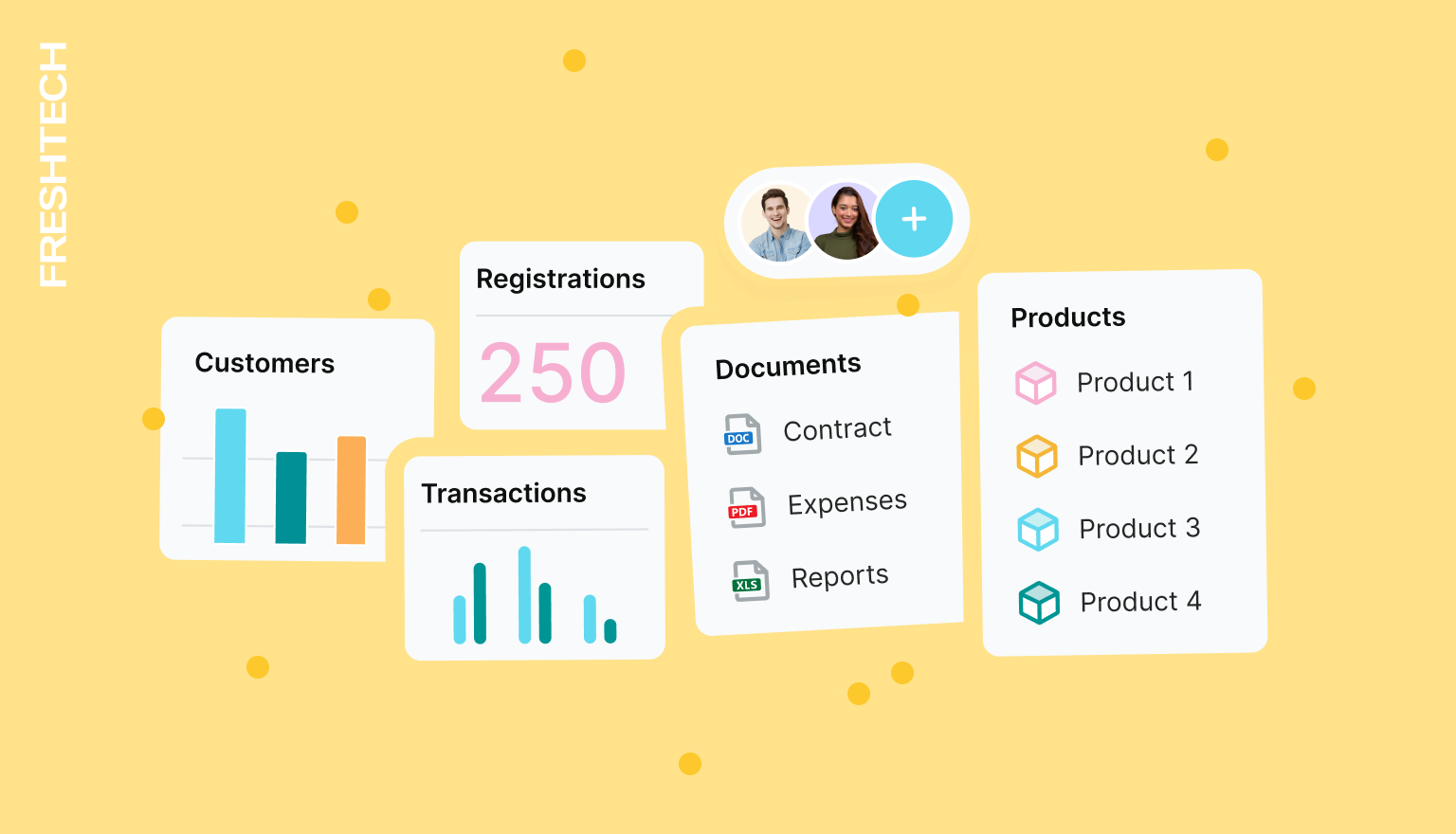
Across automation requests from different industries, one pattern keeps emerging: companies describe their needs differently, but the operational problems behind those requests tend to be the same. Why that happens and what the structure behind every automated process looks like — read on.
Operational problems that repeat across industries
Manual data transfer between systems
A manager logs a request in the CRM, then manually re-enters the same data into the accounting system because there's no integration between the two. When this happens dozens of times a day, the team spends hours on mechanical data duplication. Every handoff means a delay, a risk of human error, and employee time spent on a task that adds no value whatsoever.
Unpredictable operational costs
As a business grows, the team grows with it. That seems logical, but it actually signals that the process only scales by adding headcount. Automation changes that: operational volume increases, but the need for manual work doesn't.
No single source of truth
Another common situation: data is scattered across multiple tools — CRM, accounting system, task manager, email, messengers. To get a complete picture of a specific client, deal, or project, someone has to manually pull information together from several sources. The result is decisions that are either slow or based on incomplete data.
Reactive rather than proactive operations
Without automated monitoring, issues surface after the fact — the business finds out about a problem only once it has already affected operations or outcomes. When a system tracks key metrics in real time and sends a triggered alert as soon as a threshold is reached, the team responds to a signal, not to the consequences.
The universal process structure
Behind every industry-specific scenario lies the same operational logic. Nearly every automated process can be broken down into the following stages:
Trigger → Data Validation → Decision Logic → Action Execution → Logging → Notification
A trigger can be an event, a status change, or a threshold being reached. Next comes validation: checking whether the data is correct and whether the conditions to proceed are met. The decision logic determines what happens next. Executing that decision produces a result: a document created, a message sent, a record updated. At the logging stage, the system captures the entire chain — for audit, diagnostics, and further analysis. The relevant parties are then notified of the outcome or any deviations.
⚪️ Financial services: a client submits a loan application → data verification and credit history check → scoring model applied → decision generated → all verification steps logged → client and manager notified of the outcome.
⚪️ E-commerce: order placed → payment details and stock availability verified → items reserved → picking task assigned → transaction logged → customer notified of order confirmation.
⚪️ HVAC: service request created → site data and equipment type verified → technician assigned and job order generated → work carried out → completed tasks and materials used logged in the system → customer notified upon completion.
When the industry does matter
⚫️ Compliance. In healthcare, finance, and anywhere personal data is processed, automation operates within strict regulatory requirements (HIPAA, GDPR, etc.). These determine what data can be passed between systems, how it must be stored, and who can access it.
⚫️ Legacy system integration. A manufacturing company running an outdated ERP and a startup on a modern cloud stack represent fundamentally different amounts of integration work. Legacy systems often lack documented APIs, and any connection to them requires additional time for investigation and coordination.
⚫️ Audience specifics. B2B and B2C follow different automation logic: B2B involves more complex approval workflows and access control models, along with integrations with counterparty systems; B2C deals with higher transaction volumes and greater sensitivity to response time.
⚫️ The cost of failure. In aviation, energy, or healthcare, a system failure carries consequences of an entirely different magnitude than in e-commerce. This shapes the architecture: more checkpoints, fallback scenarios, and manual confirmation at critical stages.
Industry shapes the details of implementation: regulatory requirements, integration complexity, architectural decisions. But the underlying logic stays the same, which is exactly why experience gained in one sector translates to another.
If you recognized your business in this article and want to figure out where to start with automation — leave your details in the form. Our manager will get in touch and suggest a solution tailored to your needs.


Bring your ideas to life with FreshTech
Hi! I'm Max Rybalko, Head of Business Solutions. Choose a convenient time, and we'll discuss how to turn your project
into reality